
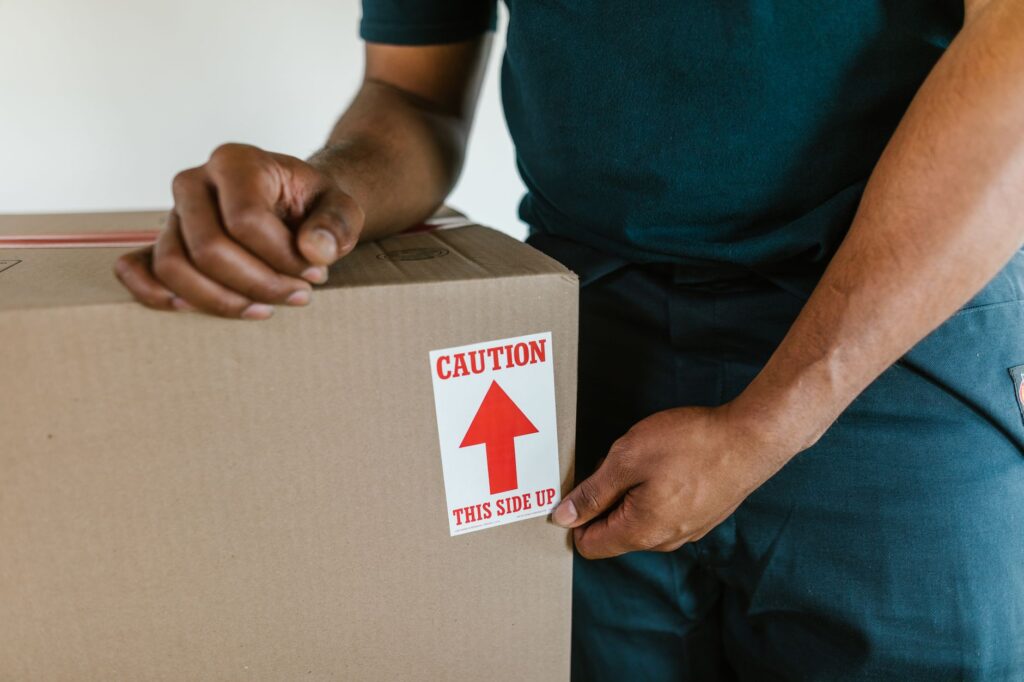
A 200-pound sofa does not become lighter when a stronger person picks it up. The load is the same; what changes is how well the body is positioned to absorb and transfer that weight. Raw strength matters, but it only pays off when it is routed through joints, muscles, and movement patterns that can handle the demand. Understanding that relationship is the difference between moving heavy objects for a living and getting hurt on the first job.
Muscle Versus Technique
Strength sets the ceiling for what a person can lift. Technique decides how much of that ceiling can be used safely and repeatedly. A powerful set of legs and a strong back create the potential to move a loaded dresser, but if the movement itself is sloppy, that power works against the body. The force has to go somewhere, and poor form sends it into the smaller stabilizing tissues that were never built to carry it.
Technique is really a way of recruiting the right muscles in the right order. The large muscle groups of the legs and hips are designed to generate force against gravity. The arms and shoulders are better suited to controlling and steering a load than to hoisting it from the floor. When a mover drives upward from the legs, keeps the object close to the torso, and lets the hips do the work, the strongest machinery in the body carries the weight. Strength without that sequencing is just a reserve waiting to be wasted.
This is why training and repetition matter as much as muscle size. Crews that lift all day develop an almost automatic sense of where their weight is and how to brace before taking on a load. In a place like London, Ontario, where narrow older staircases and tight doorways are common, that practiced efficiency is worth more than brute force, and it is one reason people look for brawny movers who clearly know how to handle awkward spaces rather than simply strong individuals working on instinct.
Protecting the Spine
The spine is the part of the body most often injured during heavy lifting, and the reason is mechanical. When you bend forward at the waist to pick something up, the lower back becomes a long lever with the load at the far end. Even a moderate weight creates enormous compressive and shearing forces on the discs between the vertebrae. Multiply that by dozens of lifts in a shift and the margin for error disappears.
Safe lifting keeps the spine in a neutral, braced position so it transmits force rather than bending under it. That means hinging at the hips, keeping the chest up, and letting the knees drop toward the ground instead of rounding the back. Tightening the core muscles before the lift creates internal pressure that stiffens the torso like a natural weight belt. The goal is to make the trunk rigid so that the movement happens at the hips and knees, not in the vulnerable lower spine.
Keeping the load close is the other half of the equation. The farther a weight sits from the body, the longer the lever and the greater the strain. Hugging a box or a piece of furniture against the torso shortens that lever dramatically, which is why experienced crews will shuffle an item closer before committing to a lift rather than reaching out for it.
Teamwork Under Load
Many items are too heavy, too long, or too unbalanced for one person to handle no matter how strong they are. Two people lifting together is not simply double the capacity. It only works when the movement is coordinated, because an unexpected shift by one partner transfers the full load onto the other in an instant.
That is why good crews talk constantly during a lift. They agree on who leads, count down before standing, and call out steps, turns, and stops. On stairs, the person below usually carries more weight and sets the pace. Communication turns two strong bodies into a single controlled unit, and it is often what separates a smooth move from a dropped appliance or a strained back.
If you are planning a move, the practical next step is to watch how a crew sets up a lift before they carry anything: a team that positions itself, braces, and communicates first is showing you the mechanics that keep both your belongings and their backs intact.