
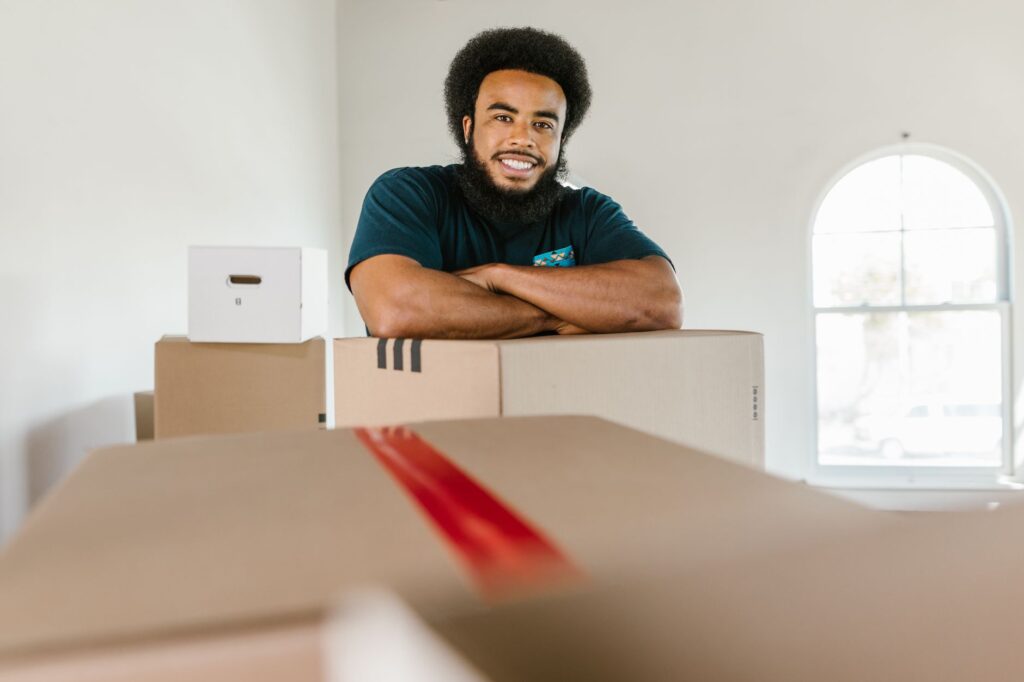
A refrigerator weighs roughly the same whether a novice or a professional lifts it, but only one of them walks away without a sore back. The difference is almost never raw strength. It is technique: where the hands go, how the spine stays, when the knees bend, and how two people move a single object without fighting each other. Good movers treat lifting as a skill to be practiced, not a feat of brute force.

Lifting With Legs
The core rule behind every safe lift is simple to state and hard to make automatic: the legs do the work, not the lower back. A trained mover approaches a heavy box by stepping close, setting the feet about shoulder-width apart, and dropping into a squat rather than bending at the waist. The spine stays roughly neutral, the chest stays up, and the load rises as the legs straighten. The hips and thighs are built for this; the small muscles along the lower spine are not.
Keeping the item close to the body matters just as much as the squat. A box held at arm’s length puts enormous leverage on the back, while the same box hugged against the torso feels dramatically lighter and stays under control. Experienced crews also plan the lift before they touch anything heavy, noting where they will set it down and clearing the path so they never have to twist or stop halfway.
Gripping Bulky Loads
Strength is wasted if the grip fails, and bulky loads rarely come with convenient handles. Movers compensate by reading each object before they lift. A dresser gets tipped slightly to find its balance point; a mattress gets folded or strapped so it stops flopping; an awkward appliance gets wrapped so the fingers have something to hook. Lifting straps and moving blankets are not luxuries, they are grip extenders that turn a slippery, cornerless mass into something the hands can actually hold.
The hands themselves work best when they grip from underneath rather than pinching from the sides, letting the arms act as hooks while the legs and core carry the weight. In a city like London, Ontario, where movers deal with everything from narrow Victorian staircases to tight modern condo elevators, that control over a bulky load is what keeps a sofa from scraping a wall or slipping free on a landing. Crews known as brawny movers earn the reputation less through sheer muscle than through the steady, practiced grip that lets them pause mid-lift, adjust, and keep a heavy piece exactly where they want it.
When a piece is simply too large for one person, the goal shifts from lifting it outright to keeping it stable while it is tilted, slid, or walked onto a dolly. A good grip buys the seconds needed to reposition safely.
Teamwork Under Weight
Two people lifting together can either halve the load or double the risk, and the deciding factor is communication. Before a heavy item leaves the ground, the crew agrees on who leads, who follows, and what words signal each move. A simple count keeps the lift synchronized so both ends rise at the same instant. On stairs, the person below carries more weight and sets the pace, while the person above guides and steadies.
Movers also stay aware of each other’s limits in real time. If one person needs to reset their grip or rotate around a corner, they say so before they move, not after. Silence under a heavy load is how fingers get pinched and backs get wrenched. The strongest crews tend to be the ones who talk the most.
Preventing Common Injuries
Most moving injuries are predictable: strained lower backs from bending instead of squatting, pulled shoulders from overreaching, and crushed or pinched fingers from poor hand placement. Nearly all of them trace back to a shortcut taken when someone was tired or rushing the last few boxes. Proper footwear with good traction, gloves for grip, and regular short breaks do more to prevent injury than any single trick of technique.
If you are planning to move anything heavy yourself, start with one habit before all the others: get in the practice of squatting to lift and keeping the load tight against your body. Build that into muscle memory on the light boxes, and it will protect you when the heavy ones arrive.